



Training Smart and Recovering Right: What Every Triathlete Needs to Know
Triathlon is one of the most demanding sports you can take on. You are asking your body to swim, cycle and run, often in the same session, and do it week after week without breaking down. Most people who struggle with the sport are not lacking effort. They are lacking structure.
Here is what the best triathletes understand that most beginners do not: training hard is only half the job. How you recover from that training is just as important.
Building a Training Plan That Actually Works
The biggest mistake new triathletes make is treating all three disciplines equally. They jump in the pool, go for a ride and then add a run on top, with no real thought given to how those sessions interact with each other. The result is fatigue that builds faster than fitness.
A proper training plan accounts for the order of sessions, the intensity of each one, and the rest built in between. Swimming is generally less taxing on the body than running or cycling, which is why many coaches use it as a recovery tool as well as a performance one. Cycling builds your aerobic base without the impact stress of running. Running is where most injuries happen, so it needs to be managed carefully.
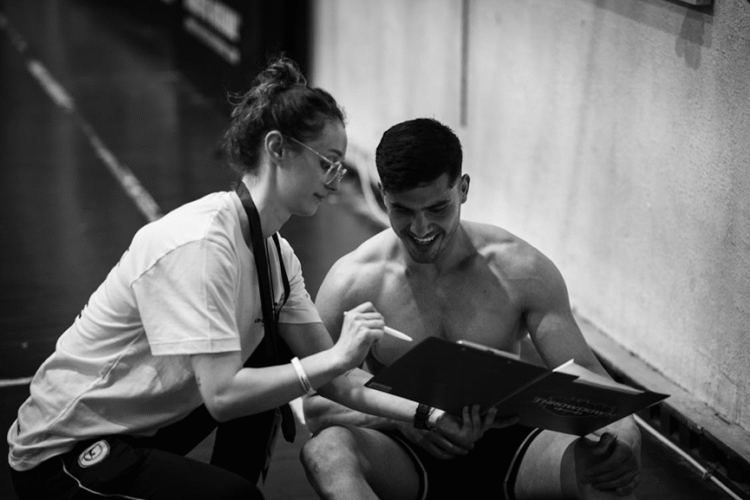
Getting this balance right is hard to do on your own. Getting a triathlon coach can help you build structured training plans around your race goals, lifestyle and current fitness, taking the guesswork out of the process.
The Part Most Triathletes Skip: Recovery
You do not get fitter during training. You get fitter during recovery, when your body repairs the stress caused by training and comes back stronger. Skip recovery and you are just accumulating fatigue without getting the benefit.
Active recovery is one of the most effective tools available. Rather than doing nothing on a rest day, low-intensity movement keeps blood flowing to tired muscles and speeds up repair. Swimming is one of the best forms of active recovery there is. The water supports your bodyweight, removing the impact stress that running and cycling create, while gentle movement keeps the muscles working without loading them hard. A 20 to 30 minute easy swim after a hard training block can make a real difference to how you feel the next day.
Cold water and hydrostatic pressure both play a role too. Immersion reduces inflammation and helps clear the metabolic waste that builds up during hard exercise. Many elite athletes treat water-based recovery as a standard part of their training week, not an afterthought.
Having the Right Setup at Home
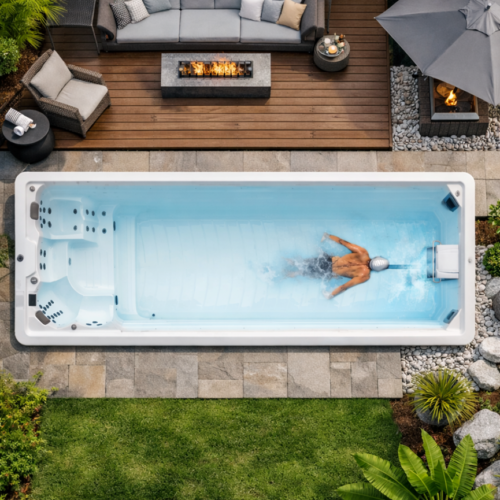
If you are serious about triathlon, having easy access to water for both training and recovery changes things. You are no longer relying on pool opening times or making a trip to a facility after a long ride. You can get in the water when your body needs it.
At Blue Cube Pools, we design luxury indoor and outdoor swimming pools in and around Bedfordshire. If you are looking for a full pool for proper swim training or a swim spa that doubles as a recovery tool, at A6 Hot Tubs you can get a set up right at your home. A swim spa works particularly well for triathletes as it gives you resistance swimming in a compact footprint, alongside warm water immersion to help muscles recover between sessions. View here to see the range of Swim Spas to suit your recovery needs: https://www.a6hottubs.co.uk/category/swimspas/
Getting Serious About It
If you are training for triathlon and not seeing the progress you expected, the answer is usually not more training. It is better training combined with proper recovery. Work with a coach who can structure your sessions intelligently, and look at how you can build recovery into your week as a fixed part of the process rather than something you do when you feel bad.
The athletes who last in this sport are not always the ones who train the hardest. They are the ones who train smart and recover well.